
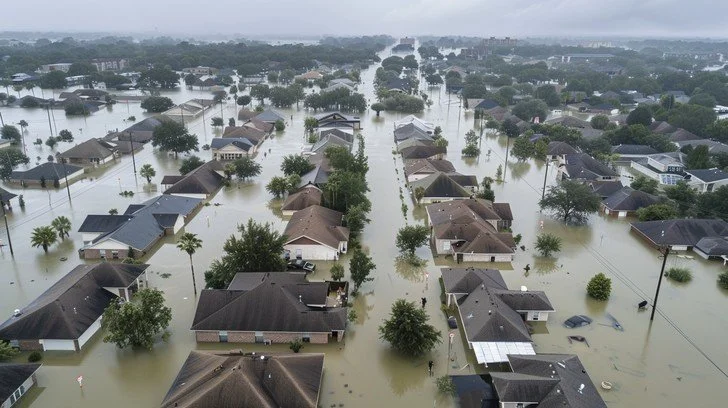
The Surge Plan Nobody Says Out Loud
Adrian Jolly, Executive Chair of the BDMA (British Damage Management Association), made a point recently, in comments ahead of Cotality event in September 2026, that deserves closer examination than it's likely to get in passing.
Speaking about surge, the sudden spikes in demand created by storms, floods, and freeze events, he observed that most businesses attempt to absorb it using the same operating framework built for ordinary, business as usual volume, and that framework buckles within 48 hours.
I think the reality inside claims and restoration is sharper than that framing suggests, and considerably more uncomfortable to state plainly.
Surge is not an untested hypothetical for this sector. It is a recurring, familiar condition. Storms happen most years. Floods happen most years. Nobody working in claims or restoration needs the concept of surge explained to them, because they've lived through it more than once.
What has genuinely changed is the room available to absorb it. Margins across this sector have been compressed for long enough, and tightly enough, that holding genuine spare capacity in reserve, people, equipment, supplier relationships kept warm for a surge that might not arrive this particular year, has become close to commercially impossible. That capacity hasn't been removed through a deliberate strategic decision. It has simply been priced out, gradually, as an unresolved trade-off between margin and resilience quietly resolved itself in favour of margin, without anyone ever formally deciding that it should.
That is the part worth sitting with. Nobody chose to remove surge capacity from the sector. It disappeared as the accumulated, unplanned consequence of thousands of individually reasonable decisions about cost, each one defensible on its own, none of them evaluated against what they were collectively doing to the sector's ability to absorb a genuine shock.
The result is a surge strategy that exists, in practice, without ever having been written down or agreed. The strategy is that the next surge event stays local. A localised flood or storm allows capacity to be pulled in from unaffected regions, from businesses and crews not currently under pressure. That has worked, reasonably well, for a number of years.
A national event removes that option entirely. If the surge is nationwide, every part of the sector needs the same capacity at the same moment, and there is nothing spare anywhere to draw on, because the margin pressure that hollowed out reserve capacity was never a local phenomenon, it was sector wide.
I don't think this gets discussed honestly enough, partly because it's an uncomfortable thing to say inside a sector already under real commercial pressure, and partly because the current arrangement has worked well enough, so far, that questioning it can feel like manufacturing a problem that hasn't actually materialised yet. But an unresolved trade-off doesn't stop accumulating strain just because it hasn't been tested. It simply waits.
Adrian's proposed answer, pre-agreed rate structures, shared scoping protocols, realistic service levels settled in advance, is the right direction, and a considerably stronger position than where most of the sector currently sits by default. In the absence of that kind of agreement, what most businesses are actually relying on isn't a plan. It's an assumption, rarely stated out loud, that the next event stays contained to a scale the remaining capacity can still reach.
The Critical Friend
Most businesses in this sector can describe how they handled the last surge event.
Fewer have actually worked through what happens if the next one isn't localised, or whether that's simply been assumed rather than agreed.